
Story County Sex Offender Checks
The Iowa Division of Criminal Investigation, or DCI, manages the public Iowa Sex Offender Registry. Its search can focus on Story County as a whole or on a place such as Ames, Nevada, or Huxley. A name search works best when the spelling is known. An address or ZIP search is more useful for neighborhood awareness. Map pins and street data still need care because people move, reporting events take time to post, and the portal may limit the detail shown by law.
A Story County registry lookup should answer one narrow question at a time. Check the profile before drawing a conclusion from a list entry or map pin. The registered status, photo date, qualifying offense, and verification date provide context that a result card may lack. A registry entry also does not mean the person is now in custody or has committed a new crime.
The official Iowa Sex Offender Registry interface shows the state search layer used for Story County checks.
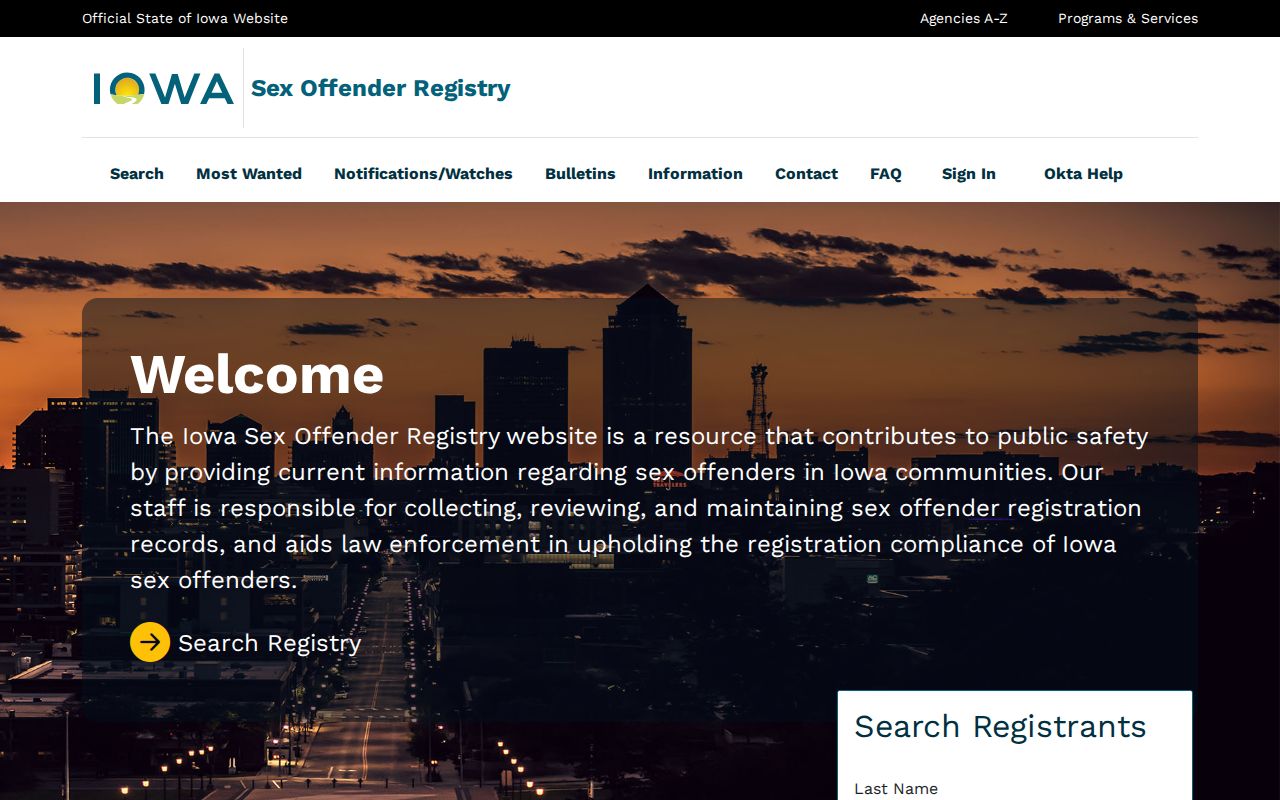
That state portal is the primary place to confirm Iowa profile and compliance fields.
Story County Registry Search Channels
Three official channels cover different needs. Search the Iowa portal for public profiles and geographic results. Contact the Story County Sheriff's Office for local registration or suspected noncompliance information. Call or email the DCI registry unit when a question concerns portal operation, statewide registration data, or the meaning of a registry field. For immediate danger, call 911 rather than using a registry contact line.
The sheriff does not publish a separate Story County offender database in the research record. Local questions route through the Justice Center at 1315 South B Avenue in Nevada. The county's official sheriff contact directory lists the main sheriff and nonemergency number as 515-382-6566. A caller should describe the issue without confronting the registrant or visiting a listed address.
The current Iowa Code chapter 692A index provides the legal frame for public registry access and local registration duties.
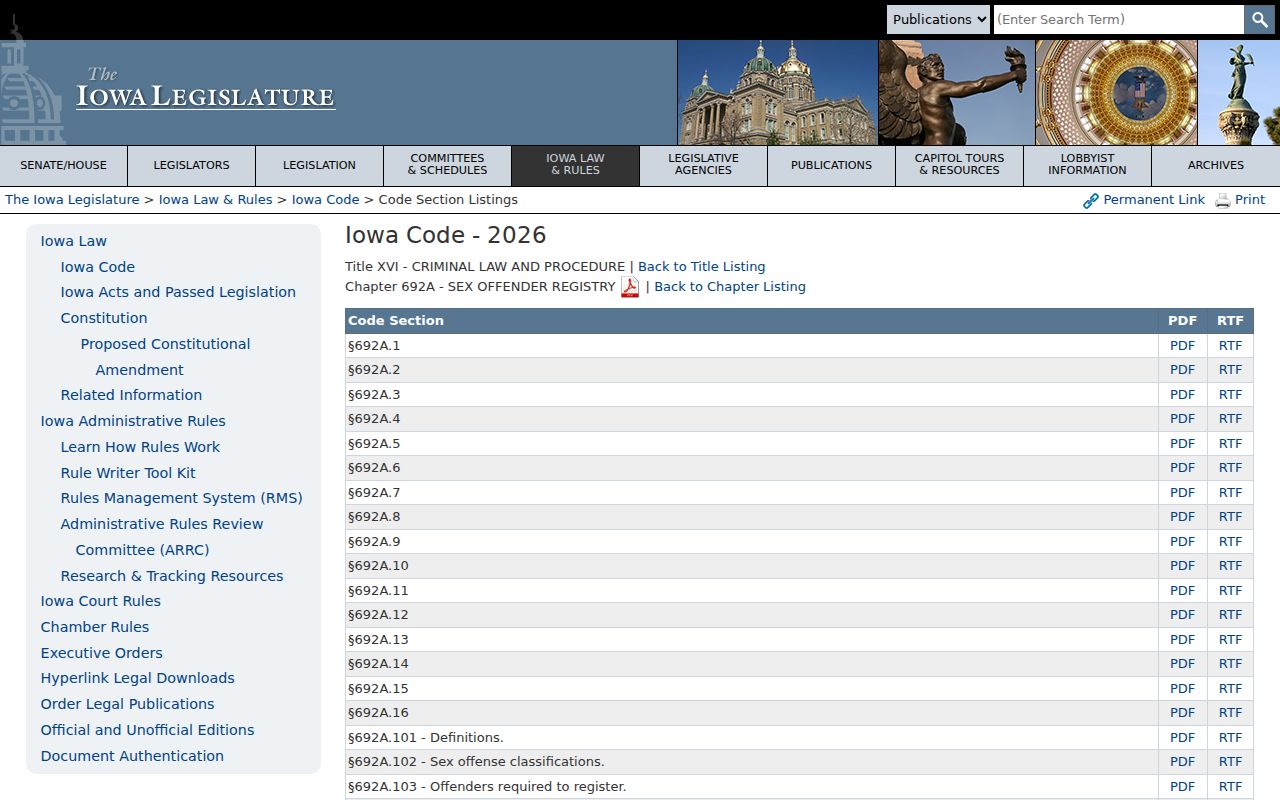
Chapter 692A is the right source for current duties, public notice rules, and limits on use.
Iowa Sex Offender Registry Searches
Open the registry and read its conditions before searching. The live interface may change, so use only the choices actually shown. The county filter is direct, while city, ZIP, and address controls narrow the geography. Exact radius choices were not exposed in the static research capture and should not be assumed.
- Open the Iowa registry and review the public-use notice.
- Choose a name search or enter a city, county, ZIP code, or address.
- Select Story County when the goal is a county-wide result, then run the search.
- Compare list and map results, open the profile, and verify its status and dates.
These are the controls documented on the official Iowa search. None is listed as universally required because the chosen search method determines which input is needed.
| Field Label | Type | Required | Notes |
|---|---|---|---|
| Last Name | Text | No / conditional | Starts a name search; check live matching behavior |
| First Name | Text | No | Narrows a name result |
| City | Text or dropdown | No | Use Ames, Nevada, Huxley, or another municipality |
| County | Dropdown | No | Select Story |
| ZIP Code | Text | No | Uses a five-digit ZIP code |
| Address and Radius | Text and dropdown | No | Supports geographic searching where offered |
| Map / List View | Tabs or buttons | Not applicable | Switches between pins and a result list |
Note: A map point is a search aid, not proof that every address fact is current.
Story County and National Registry Layers
The Iowa registry is strongest for Iowa-specific profile details. The U.S. Department of Justice's National Sex Offender Public Website, or NSOPW, searches participating jurisdictions through one national layer. It is useful when a person may have moved across state lines or when a Story County name search alone is too narrow. Results should lead back to the source jurisdiction for the current profile and local status.
NSOPW does not replace DCI. Its value is reach, while the Iowa portal supplies the state's registration fields and notices. Search both when geography is uncertain. If the national result and Iowa profile differ, ask the Iowa DCI registry unit to clarify the Iowa record rather than choosing one result by guess.
The Justice Department provides the official NSOPW national search for cross-jurisdiction queries.
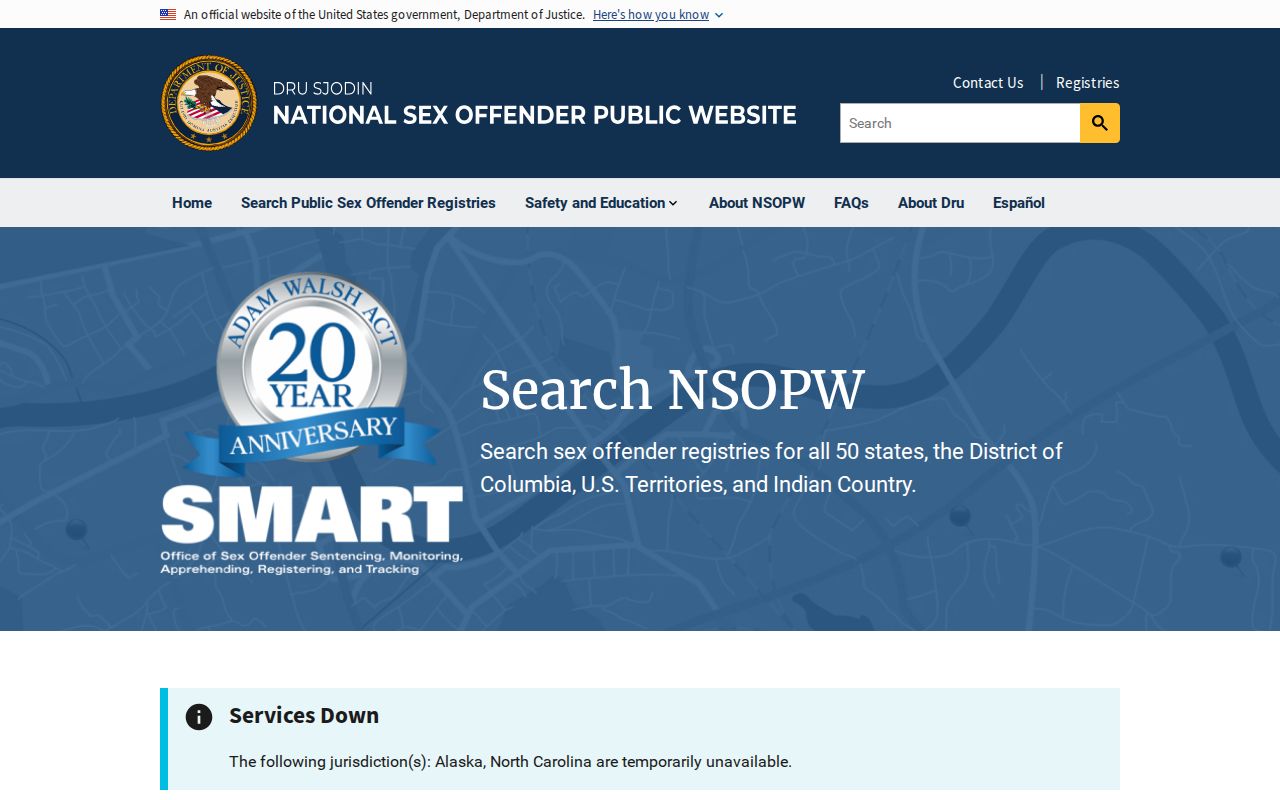
The national layer broadens a search, while the Iowa registry remains the local detail source.
Registry Profiles: What They Show
A public profile joins identification, registration, and qualifying-offense facts. Read each category on its own. A historical conviction describes why registration applies. Compliance status addresses current registration duties. A residence field reflects what the law permits the portal to display. None of those fields alone is a clinical estimate of risk.
| Name and Aliases | Published names used to distinguish the listed person |
|---|---|
| Photo and Description | Current photograph and photo date, plus public sex, race, age or date information, height, weight, hair, eyes, scars, marks, or tattoos |
| Registered Location | County, city, and residence or location detail at the level Iowa law permits |
| Qualifying Offense | Offense description, jurisdiction or statute, conviction date, and public victim-age category where shown |
| Tier | Iowa offense-based classification, not a personal risk forecast |
| Status and Dates | Compliance, registration or verification dates, and registration agency where displayed |
| Other Public Facts | Vehicles and work or school facts only to the extent Iowa law makes them public |
Some data is withheld by a different law. The Iowa juvenile-record statute explains why most juvenile court records follow controlled access rules.
That distinction helps prevent a missing public field from being mistaken for a failed search.
When Story County Registry Results Mislead
No result does not always prove there is no registration history. Try alternate spellings, remove an overly tight radius, and search the full county. A transfer between jurisdictions or a recent update may also affect what appears. Some categories may not be public. The appropriate fallback is NSOPW, then DCI or the sheriff, not a commercial people-search service.
Geographic results need the same restraint. A radius search identifies registrants within the selected area as the system records it. It does not identify every person with any criminal history, every community safety issue, or an exact live location. If an address seems wrong, note the profile and the date viewed, then report the concern through law enforcement. Do not go to the location to investigate.
Note: A profile's old conviction facts and its current compliance status answer different questions.
Registration Levels and Duties in Iowa
Iowa assigns a tier from the qualifying offense under chapter 692A. It is not a simple prediction of whether a person will reoffend. The statute also sets baseline periods and in-person verification cycles. Recidivism, a special sentence, another jurisdiction's rule, or federal law can change an individual duty, so the public profile and current statute control.
| Tier | Baseline Duration | In-Person Verification | Key Point |
|---|---|---|---|
| Tier I | 10 years | Annually | Baseline may change under other legal conditions |
| Tier II | 25 years | Every six months | Confirm the current offense classification |
| Tier III | Lifetime | Every three months | Higher check-in frequency does not permit harassment |
Registrants must report required changes within statutory deadlines and register with the sheriff or other jurisdictional agency. Iowa Code §692A.114 also governs residency exclusions for certain people and protected locations. Its current text and exceptions should be read before relying on any distance rule.
Story County Registry Address Review
If a Story County address appears wrong, save the public profile details and contact the proper office. The sheriff handles local registration and noncompliance information. DCI handles the registry system and statewide record questions. The county's sheriff division overview does not post exact Story County appointment and check-in procedures, so call before appearing at the Justice Center.
Story County Sheriff's Office
Story County Justice Center
1315 South B Avenue
Nevada, IA 50201
515-382-6566
Iowa DCI Registry Unit
215 East Seventh Street
Des Moines, IA
515-725-6050
sorinfo@dps.state.ia.us
The DCI Sex Offender Registry contact page is the official source for state unit details.
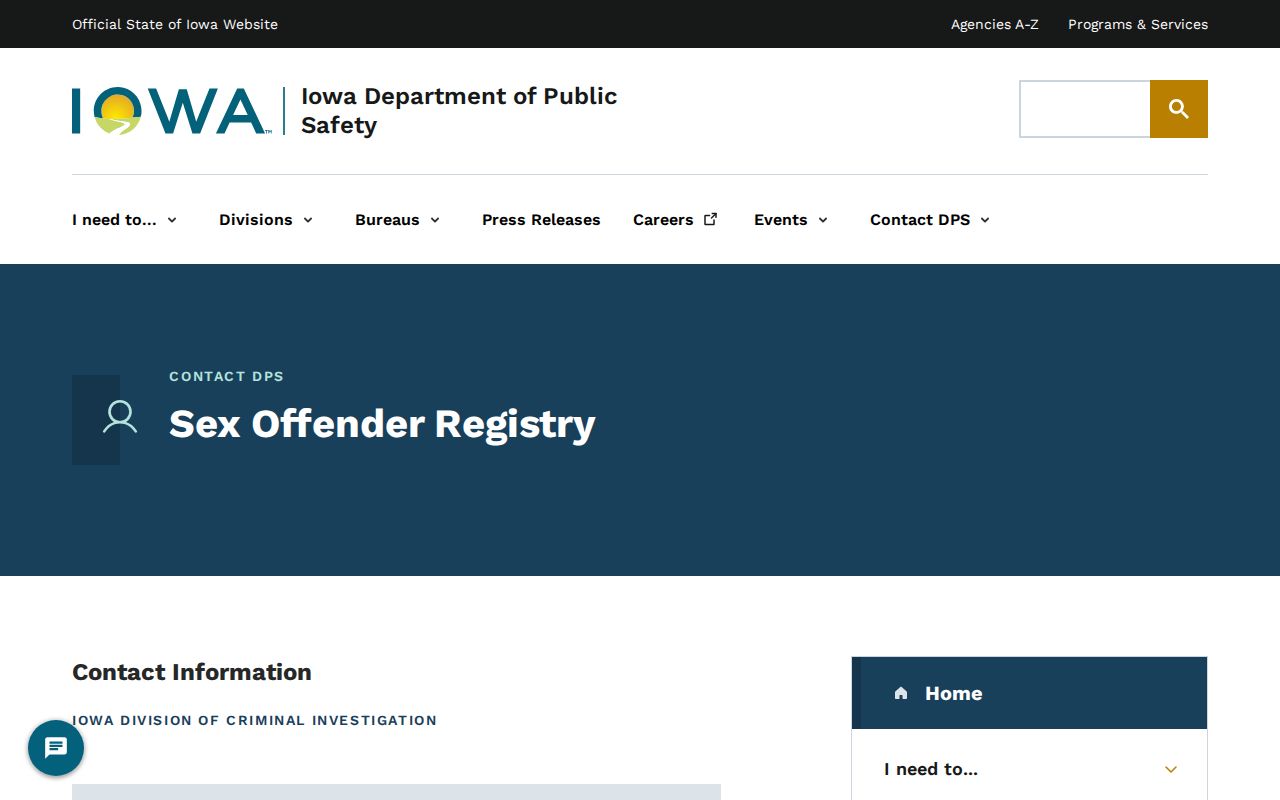
Use the state unit for registry-system questions and the sheriff for local registration concerns.
Story County Registry and History Records
A registry profile is not a full Iowa criminal-history report. Chapter 692A controls sex offender registration and public notice. Iowa Code chapter 692 governs criminal-history dissemination through DCI. A court file adds filed charges, orders, disposition, and sentence. Those products can overlap, but each comes from a distinct system and answers a different question.
The official Iowa criminal-history law index shows the separate rules for DCI record dissemination.
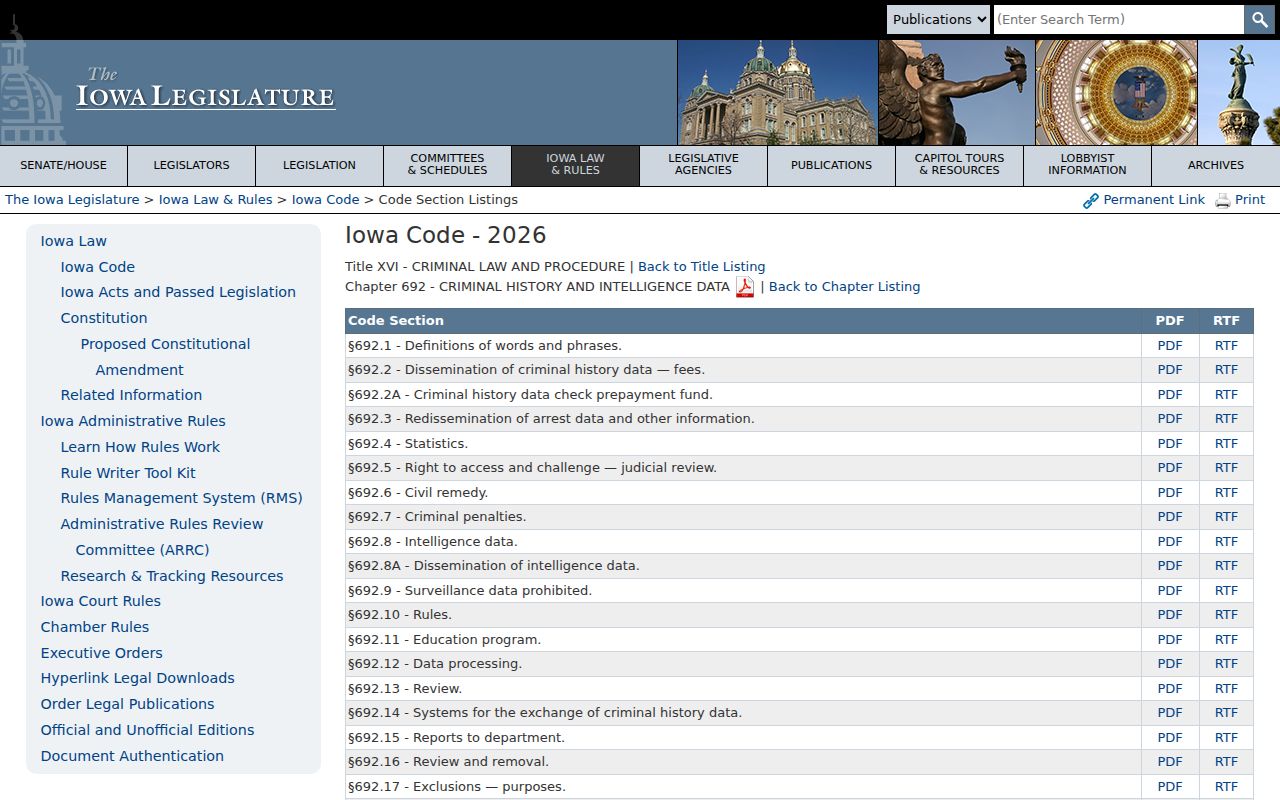
For a case outcome, use the Story County Court Case Lookup rather than treating a registry profile as the whole court record.
Using Registry Information Lawfully
Iowa publishes registry data for public safety and community awareness. A lawful search can help a family understand nearby public notices or confirm a profile before asking an agency about an error. It does not authorize confrontation, surveillance, threats, trespass, or unlawful discrimination. Suspected noncompliance belongs with the Story County Sheriff's Office. An urgent threat belongs with 911.
Community notification and public access are governed by Iowa Code §§692A.121 through 692A.126. Verify a result with the official profile and the office that maintains it. Never treat a tier as a personal risk score, and never assume a map location proves current presence at that spot.
Registry misuse is a crime: Iowa Code §692A.122 prohibits using public registry information to threaten, intimidate, or harass a registrant or household member, and it penalizes misuse of that information to commit a crime.
The official chapter 692A text should be checked for the current wording and sanctions.