
Story County Criminal History Checks
Begin with the record that best matches the question. Iowa Courts Online is the broadest free starting point for a filed Story County criminal case. The current inmate roster is better for a new custody event, and an Iowa DCI check is the official statewide history product. A deputy or city police report must come from the agency that wrote it. These sources overlap, but none replaces the others.
Use a full name, exact spelling, and a date of birth when the channel permits it. A common surname can produce several court results. Middle names, case numbers, filing dates, and the Story County filter help separate people. Follow this order when the event and record type are not yet clear:
- Search Iowa Courts Online with the county set to Story and review each count.
- Check the Story County Current Inmate Roster when custody may be recent.
- Ask the arresting agency for its incident or arrest report if the event is not yet in court.
- Order the official Iowa DCI product when statewide releasable history is needed.
- Contact the clerk for certified copies or records from before the online system's 1998 coverage line.
The official Story County government gateway shows where county departments fit into that sequence.
That county directory is a routing tool, not a combined criminal record database.
Story County's Four Record Layers
One arrest may create four separate records. The arresting officer writes an incident or arrest report. Jail staff create a booking and custody entry. The Story County Clerk of District Court opens a case file after charges are filed. Iowa DCI can then connect a fingerprint event with later disposition and correctional reports. A missing item in one layer does not prove the other layers are empty.
| Record layer | Primary custodian | Best use |
|---|---|---|
| Police report | Arresting agency | Officer narrative, event details, and alleged conduct |
| Booking | Story County Jail | Current custody, intake, bond, and release status |
| Court case | Clerk of District Court | Filed counts, orders, pleas, outcome, and sentence |
| State history | Iowa DCI | Releasable Iowa arrest and disposition cycles |
Charges can change between booking and prosecution. Read the source date and custodian before drawing a conclusion.
Official Background Checks in Iowa
The Iowa Department of Public Safety, Division of Criminal Investigation maintains the central repository. Its name-based product costs $15 for each last name searched and covers Iowa records only. The request uses an exact date of birth, first and last name, and gender on the current DCI-77 form. A middle name and other identifiers can reduce false matches.
Any requester may seek a name check. A signed release changes what DCI may disclose. Without it, a completed deferred judgment and an arrest more than 18 months old with no final disposition are not released. A person seeking a national identity-history response must use the FBI's subject-only fingerprint route. Ames Police reports that local fingerprint service is suspended until further notice, so current capture options should be confirmed before starting.
The official DCI record-check page explains the submission choices and repository limits.
Use the DCI product for a statewide record, then consult the local court file when the exact pleading or order matters.
Story County DCI Check Limits
A $15 DCI search is not the same as a Story County court search. DCI depends on fingerprints and later agency reporting. If fingerprints were never taken and sent, no DCI arrest cycle is created. A court case can still exist. A disposition may also be delayed or fail to match the original arrest cycle. The current DCI-77 request form supplies the state check fields, while Iowa Courts Online and the county jail roster check other record layers.
| Product | Cost in research | Scope and timing |
|---|---|---|
| Iowa Courts Online | Free basic search | Filed Iowa cases, generally from 1998 forward, updated after court entry |
| Iowa DCI name check | $15 per last name | Releasable Iowa history; online processing stated as about 1 to 3 days |
| Story County or city report | Current fee not located | Agency-local report; request an estimate before copies are made |
| FBI identity summary | Recheck current fee | Subject-only national response using fingerprints |
Iowa's background-check overview reinforces that a state result is not a complete court file or a search of every jurisdiction.
The limits printed by the state are part of the result and should guide any follow-up search.
Kinds of Criminal Records
Story County records differ by who created them and what stage they describe. The arresting agency holds the officer report. The jail controls intake and custody data. The clerk maintains the official court file. Iowa DCI compiles the state history product, while Iowa DOC reports prison and community-supervision status. The sex offender registry is a separate public notification system with its own rules.
- Incident and arrest reports contain the agency narrative, time, place, witnesses, evidence, and alleged basis for action.
- Booking records identify intake, arresting agency, jail charges, bond, release, and current custody.
- Court case files show filed charges, lawyers, hearings, orders, pleas, disposition, sentence, and money due.
- DCI histories join reported fingerprint events with dispositions and corrections data that Iowa law permits DCI to release.
- Warrant and supervision records come from the issuing court, serving agency, jail, or Iowa DOC, depending on the question.
The Iowa DPS Support Operations Bureau describes how fingerprint-backed records enter the state system.
That fingerprint chain explains why an arrest without a submitted print event may never appear in a DCI check.
Story County Justice Center Records
The Story County Justice Center at 1315 South B Avenue in Nevada places the sheriff, jail, district courtrooms, clerk, judges, and county attorney in one complex. Sharing a building does not merge their files. A deputy report goes to the sheriff, a booking entry belongs to the jail, a criminal pleading is held by the clerk, and prosecution material is held by the County Attorney.
The complex opened in March 2002 and replaced a 31-bed linear jail used since 1968. County descriptions identify an original 104-bed modular design, while the current sheriff division material describes 122 operating beds. Both figures belong in context. They reflect different points in the facility's history rather than one obvious data error.
The Story County Sheriff's page is the official entry to sheriff services and jail information.

Call the relevant office before visiting, since court, records, and jail counters serve different requests.
Story County Criminal Records: What They Contain
A result must be read as a group of fields, not as a single label. Names and dates help match a person. Case numbers and filing dates identify the judicial file. Each count has its own statute, class, status, and disposition. A case-level status can hide the fact that one count ended in conviction while another was dismissed.
| Name and identifiers | Legal name, aliases when reported, birth data, sex, and state or fingerprint linkage where the product permits. |
|---|---|
| Arrest and booking | Agency, arrest date, intake time, booking number, alleged charges, bond, release, and custody state. |
| Charges and statutes | Every filed count, Iowa Code citation, offense class, amendments, and charging instrument. |
| Disposition | Conviction, acquittal, dismissal, deferred judgment, or another charge-specific outcome. |
| Sentence | Custody, probation, fines, restitution, and other orders entered by the court. |
| Supervision | Prison, parole, probation, work release, or community-based placement reported by Iowa DOC. |
Short docket terms also matter.
- Disposition
- The current or final result of a specific charge.
- Deferred judgment
- A judgment held back while conditions are completed; a successful discharge is not a conviction.
- Trial information
- The prosecutor's formal charging document for an indictable Iowa offense.
- Mittimus
- The court order that commits a sentenced person to custody.
Story County Jail Records and REACH
The jail roster answers a narrow, urgent question: whether someone is in current Story County custody and what booking information is shown. It is not a historic blotter and does not establish guilt. Story County did not publish a separate official booking log during the research review. Older arrests should be traced through the arresting agency, court search, and DCI route.
Custody information also sits beside local programs that do not fit in a simple booking row. Story County describes Jail Diversion for eligible people with mental-health needs and REACH as a reentry program. The county reports an 88.8 percent arrest-free outcome for REACH participants in its own program material. That is an attributed county measure, not a general crime rate or an independent recidivism study.
The sheriff's official contact directory identifies administration, jail, and nonemergency routing.
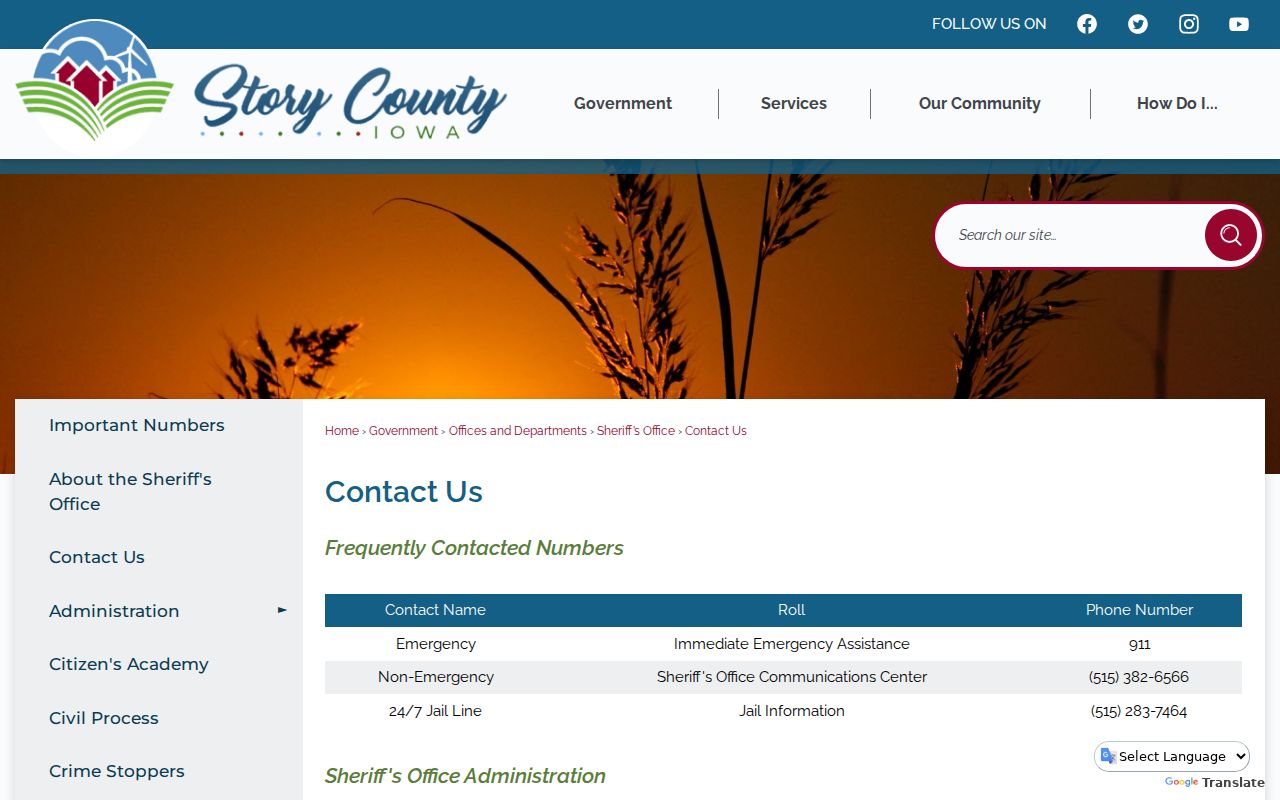
Use the directory to reach the office that holds the record instead of assuming one county number serves every file.
Iowa Public Access Laws
Iowa law separates open records from confidential data. Chapter 22 creates a right to inspect and copy public records, but it does not require an office to create a new report. Active investigative details, juvenile files, victim information, medical data, account numbers, and sealed material may be withheld or redacted. The custodian should identify the legal basis for a denial.
Key Iowa laws:
Iowa Code chapter 22 grants access to open government records and lists confidential categories.
Iowa Code chapter 692 controls criminal-history dissemination and the effect of subject authorization.
Iowa Code chapter 901C sets the qualifying paths for criminal-record expungement.
Iowa Code chapter 232 restricts most juvenile court records.
A precise Story County request should name the record, date range, location, incident or case number when known, and preferred form of delivery.
Story County Warrant Record Fallbacks
No verified public Story County warrant name-search portal was found. Avoid unofficial lists. A person trying to resolve a possible warrant should call the sheriff's nonemergency line at 515-382-6566 for routing and should not appear unexpectedly at a law-enforcement counter. Bench-warrant events may also appear in the district court docket.
The county's chapter 22 form can request sheriff-held warrant or service records, though active or unexecuted material may remain confidential. Ask the clerk about a court-issued warrant in a known case. If the event began with Ames, Nevada, Huxley, Iowa State University Police, or Iowa State Patrol, identify which agency made the arrest before requesting the incident report.
Note: A public-record request is not a safe substitute for legal advice or direct arrangements to address an active warrant.
Restricted, Sealed & Expunged Records
Iowa does not offer universal adult record erasure. Chapter 901C permits expungement for qualifying dismissals and not-guilty outcomes, plus a narrow one-time misdemeanor remedy. A discharged deferred judgment is removed from the public court case under Iowa Code section 907.9, yet DCI keeps a non-conviction entry and releases it only when authorization allows.
Juvenile court records are generally confidential. Other restrictions can protect victims, health information, Social Security numbers, account data, or material sealed by a court. When an old Story County case disappears from a public search, the cause could be expungement, confidentiality, a spelling issue, or the 1998 online coverage line. The clerk can distinguish an archived file from a legally restricted one without disclosing protected content.
Story County Supervision Record Search
The Iowa Offender Search covers more than prison. It can show people in community-based programs, probation, parole, and work release. The site states that data is updated weekly, so it is not a live Story County jail list. Search by name or offender number, then compare the result with the district court sentence and current county custody source.
Story County is served by the Second Judicial District Department of Correctional Services. Its Ames Probation and Parole Administration Office is at 111 North Sherman Street and handles local routing for supervision services. Conditions, treatment records, medical data, and officer-safety information are not automatically public.
The FBI electronic identity-history portal is a different, subject-only national route.
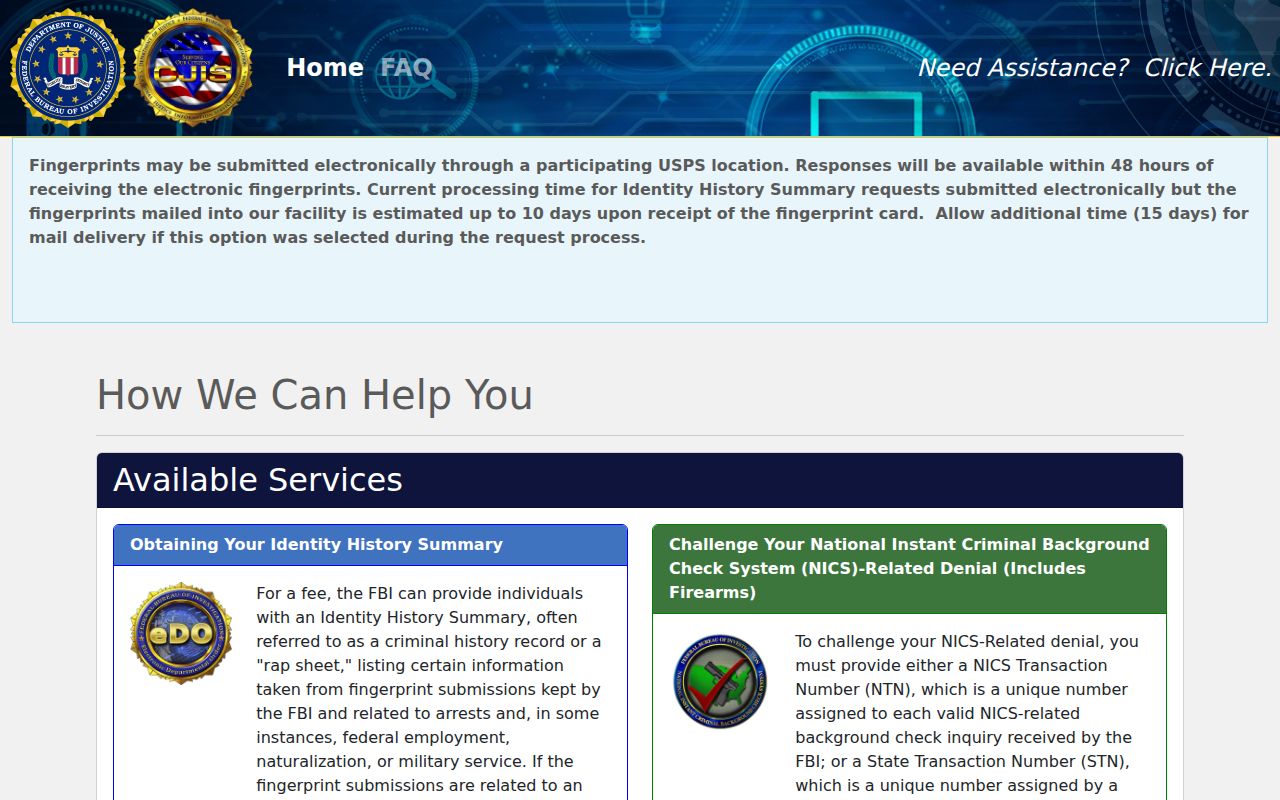
Fingerprints establish identity for that federal response, while county court and supervision files explain local events in detail.
City-by-City Criminal Records in Story County
Ames, Nevada, and Huxley are the county's three largest incorporated cities in the official 2024 population ranking used for research. Their police departments create city incident and arrest reports. Custodial bookings move to the Story County Jail, and criminal cases enter Iowa's unified District Court. Start with the local agency for the report, then follow the event to county custody and the state court file.
Ames Record Check
Ames Police records are on City Hall's first floor, while the court and clerk satellite are upstairs.
Nevada Record Check
Nevada Police holds city reports, while the nearby Justice Center offices keep separate county records.
Huxley Record Check
Huxley reports begin with city police, then move through county booking and court channels.
Correcting Story County Criminal Records
Correct the layer that contains the mistake. A wrong incident detail starts with the police agency that wrote the report. A booking issue goes to the sheriff or jail. A docket entry or filed disposition belongs with the Story County clerk. A statewide DCI mismatch should be sent to the Criminal History Record Dissemination Unit with enough detail to locate the cycle.
DCI may compare supporting records and request fingerprints to confirm identity. If the court outcome is correct but has not reached the state record, obtain the case number and disposition from the clerk before contacting DCI. Keep copies of the request and response. A chapter 22 request seeks an existing public record; it does not itself amend that record.
Note: A dismissal does not automatically remove the arrest report, jail entry, court file, and DCI cycle at the same time.